11 Museum marketing strategies to maximize your reach
07/01/26
Blog

Charitable giving to arts and culture organizations reached a staggering $25.13 billion in 2024, yet 26% of museums report weaker bottom lines today than they saw in 2019.
The donors are out there, so what’s getting in the way? Usually, it’s not awareness or generosity. It’s that most museums haven’t built the infrastructure to turn interest into action.
Closing that gap starts with visibility. When your ticketing, membership, and donor data all live in the same place, you can spot the repeat visitor who’s ready to give before the moment passes.
In this guide, we’ll walk through practical strategies to surface those opportunities and act on them quickly, turning your day-to-day operations into a steady fundraising pipeline.
Sustainable museum fundraising isn’t just about asking the right people. It’s about building the right systems to find them. These FAQs cover the fundamentals worth knowing before you build your strategy.
While museums generate revenue through memberships, ticketing, and grants, it’s rarely enough to cover everything, from preserving collections and acquiring new exhibits to community outreach and educational programming. Fundraising fills those gaps and builds the financial stability that keeps institutions thriving in the long term.
Museums have layered operational needs that go well beyond what admissions and memberships can cover. Here’s where fundraising revenue typically goes:
The most effective museums reinvest a portion of what they raise into their own development infrastructure: better tools, stronger staff, and smarter strategy.
Most museums draw from a mix of revenue streams to stay financially resilient. Here are the most common fundraising channels worth building into your strategy:
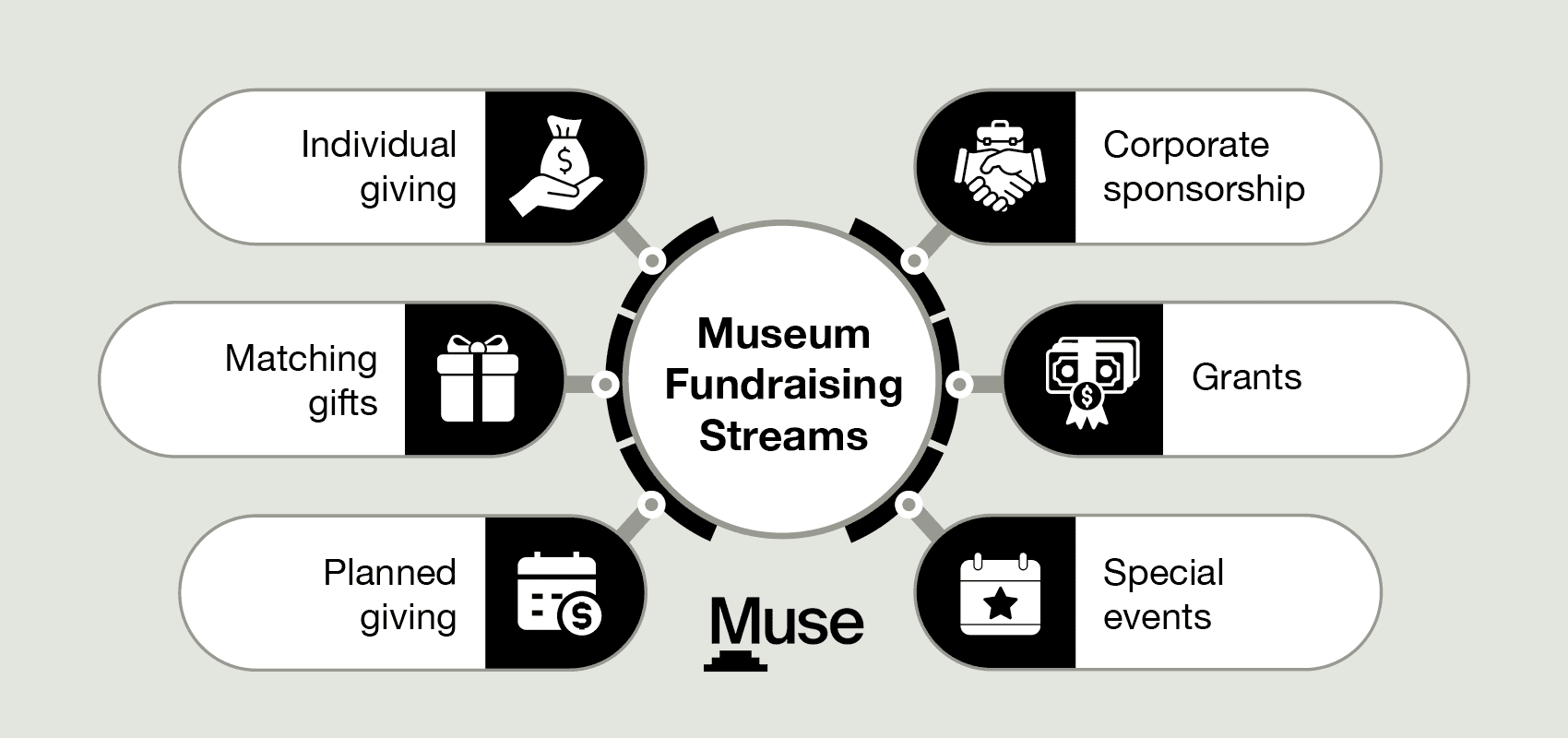
Many museums target these revenue streams via campaigns. For instance, a museum might fund a new wing through a multi-year capital campaign that incorporates individual giving, grants, and corporate sponsorships.
A membership is an exchange: supporters pay for access and perks like free admission or exclusive event invitations. A donation is a gift with no strings attached. Supporters give because they believe in your mission. Tax treatment differs too: donations are generally fully deductible, while membership deductions depend on the value of benefits received.
Museum fundraising doesn’t work quite like standard nonprofit fundraising. And that’s actually an advantage. While most nonprofits rely on direct mail and philanthropic appeals, museums sit at the intersection of commerce, education, and community. That creates more entry points for donors, but also more complexity to manage.
Here’s what makes the museum context genuinely different:
Because of these differences, applying a generic nonprofit fundraising strategy, or relying on generic software, often leaves significant revenue on the table. To truly thrive, your museum development team needs tools, workflows, and strategies tailored to your specific operations.
Strong fundraising comes down to two things: finding the right people and giving them reasons to stay engaged. These best practices will help you do both.
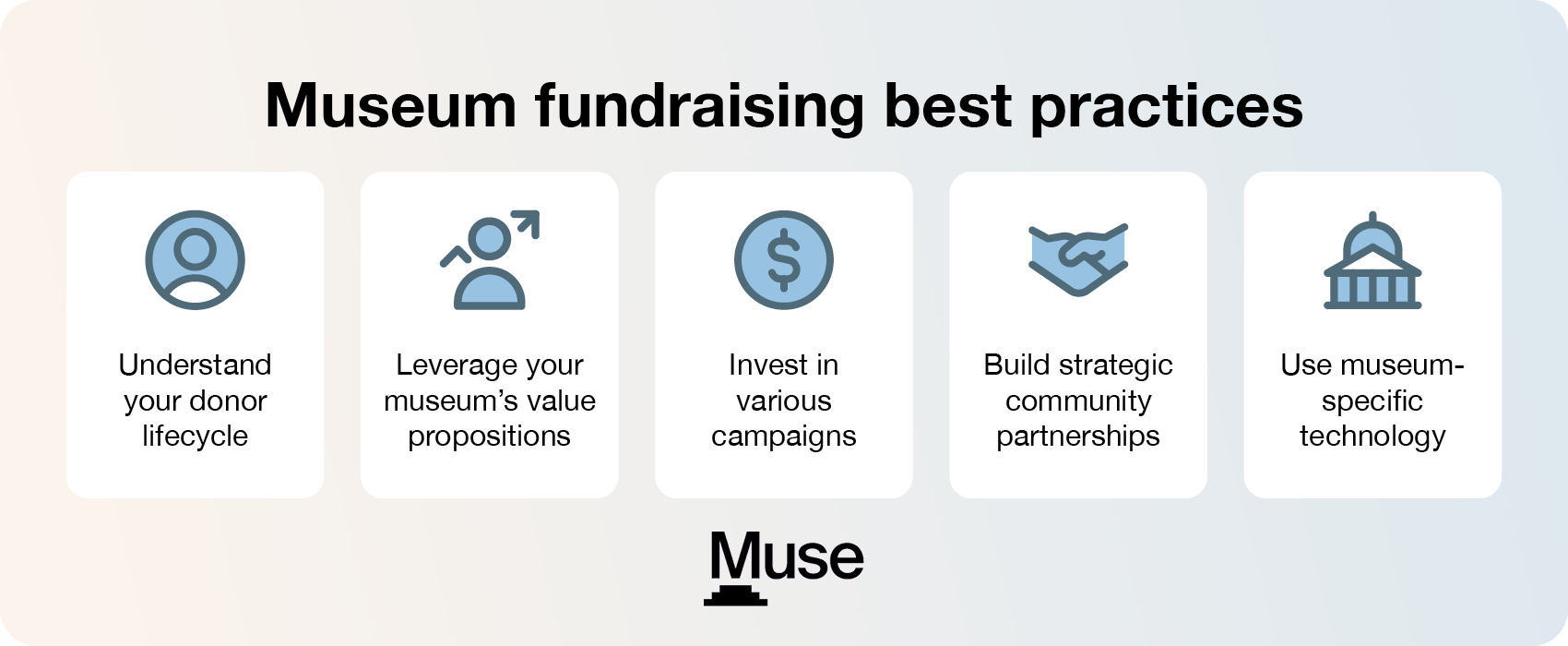
Most donors don’t give on their first interaction. They need time to connect with your mission before they’re ready to support it financially. Mapping this journey, and knowing where each supporter stands, helps your team ask at the right moment instead of too early or too late.
Museums add a layer of complexity most donor journey frameworks don’t account for. A traveling exhibit, for example, can bring a wave of first-time visitors who are excited about one thing. But not necessarily your institution’s broader mission. Capturing that enthusiasm before it fades, and guiding those visitors toward deeper engagement, takes a cultivation strategy built specifically for how museums operate.
Most nonprofits can only tell donors about their impact. Museums can show them. Your physical space, collections, and expertise are genuine cultivation tools. Use them. A few ways to put them to work:
You can extend these experiences digitally too. Virtual archive tours and livestreamed curatorial conversations let you cultivate major donors who aren’t local, removing geography as a barrier to meaningful engagement.
Relying on an annual gala or an end-of-year mailer leaves your museum exposed when economic conditions shift or donors lose interest. A stronger approach builds across multiple campaign types. When one stream dips, others keep operations running.
In addition to events and ad hoc donation requests, capitalize on these fundraising opportunities:
The most effective museum fundraising teams stay flexible. Instead of locking into a fixed annual plan, they test small campaigns, track results in their CRM, and shift resources toward whatever’s actually working.
Your museum doesn’t exist in a vacuum. Neither should your fundraising. Building real relationships with local businesses, schools, and nonprofits expands your reach and opens up funding channels you can’t access on your own. It also strengthens your case for support: when your museum is woven into community life, donors can see its value for themselves.
Consider these ideas for partnering with community organizations:
As these relationships deepen, consider formalizing your most engaged community partners into a Community Advisory Board. The goal isn’t fundraising. It’s co-creating programming that genuinely reflects your neighborhood. When local stakeholders feel real ownership over your museum’s direction, they become your strongest advocates. That kind of grassroots credibility opens doors to localized grants and introduces you to donor networks you couldn’t reach on your own.
Generic nonprofit CRMs weren’t built for how museums actually operate. When your ticketing, membership, and donor data live in separate systems, stewardship opportunities fall through the cracks. Purpose-built museum software connects those dots. A gift shop purchase or a class registration should inform your next donor conversation, not disappear into a spreadsheet.
If you’re evaluating museum fundraising software, Muse was built specifically for this. Here’s what that looks like in practice:
Disconnected systems and jumbled data prevent many museums from finding and cultivating their top prospects. Muse helps you act on these opportunities and create an intelligent fundraising strategy tailored to your museum’s needs.
The best way to know if your systems are keeping up? Test them. Have a board member complete your full visitor journey: buy a ticket online, pick something up from the gift shop, and sign up for the newsletter.
Then track what happens to that data. If flagging them as an engaged prospect takes days of manual entry, the system is working against you. A museum-first platform should connect those interactions automatically, turning every touchpoint into something your development team can actually act on.