Most cultural institutions lean hard on admission revenue to keep the lights on, but tickets alone won’t build long-term stability. When your operational data lives in one place, a single visit can turn into a membership, a class registration, or a first gift.
You don’t need a brand-new blockbuster exhibition to build a healthier budget. Your next revenue stream is likely already waiting in your programs, activities, and community outreach data. You just need to align your technology and strategy to capture it.
Before we get to the four streams, here are the questions museum teams ask us most about improving their revenue streams.
Museum revenue streams FAQ
Why do museums need diverse revenue streams?
Relying only on ticket sales and donations leaves your institution vulnerable. Bringing in revenue from multiple sources gives your organization financial stability and room to plan ahead.
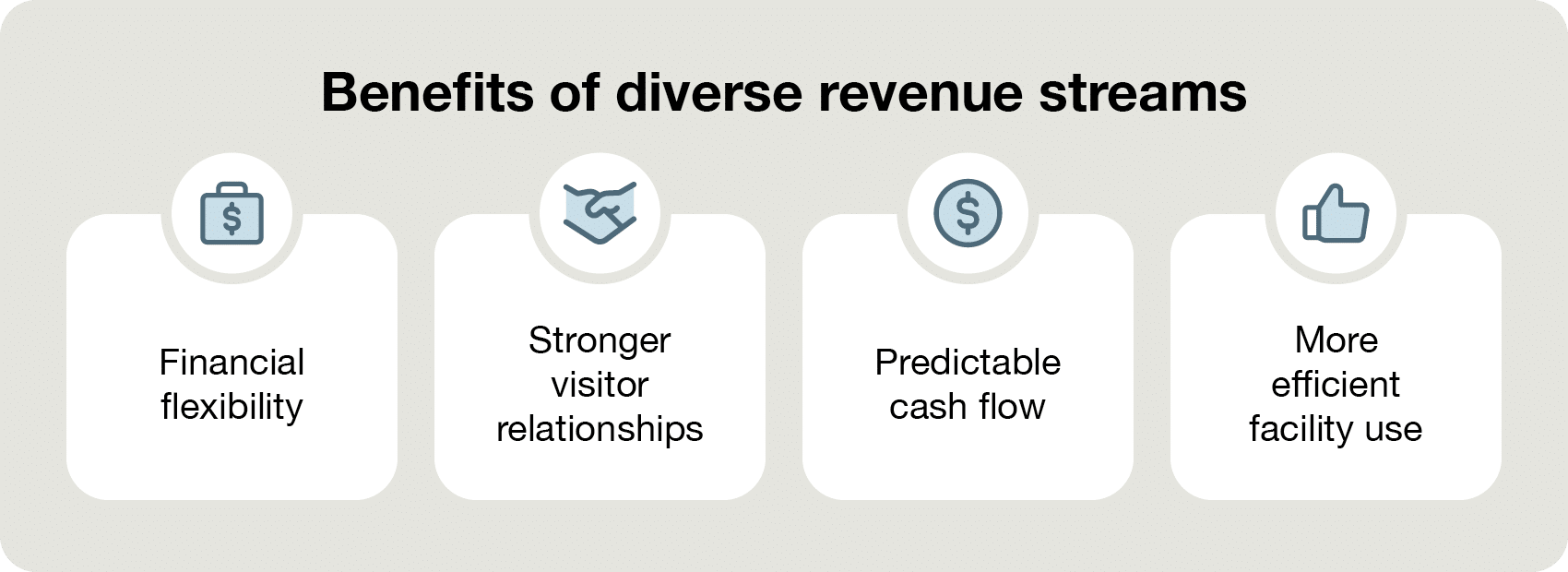
Some benefits of having multiple revenue streams include:
Financial flexibility. When seasonal attendance dips or a rainy spring flattens ticket revenue, other income sources cushion the shortfall. Your team gets room to adapt instead of reaching for budget cuts.
Stronger visitor relationships. Retail, premium programming, and digital tiers let visitors support you in the ways they actually enjoy. Those small commitments are often the first step toward a bigger gift.
Predictable cash flow. Memberships, digital subscriptions, and advance event sign-ups land on a calendar you can see. That makes covering payroll and monthly bills far less of a guessing game.
More efficient facility use. Off-hours rentals and monetized event space put your building to work on the evenings and Mondays it would otherwise sit empty.
Keep in mind that different revenue streams appeal to different guests. A tourist passing through town might buy one ticket and never come back. A local family might sign up for summer camp, host a birthday party, and buy an annual membership. Giving people multiple options can capture revenue from new sources.
How can museums choose revenue streams?
Choosing the right revenue sources starts with a close look at what you already have and how your audience already behaves. Focus on these three areas:
Existing space and assets. What do you already own that could help earn additional revenue? Maybe it’s an outdoor courtyard that would make a beautiful evening venue. Maybe it’s the one exhibit that draws a crowd every Saturday.
Audience interests. What do your visitors actually care about? A children’s museum often finds its footing with birthday parties and summer camps. An art museum might do better with special exhibition passes and curated gift shop items.
Low operational complexity. Favor streams that run on the tools and staffing you already have. New income should feel like an extension of the work your team already does, not a side project nobody has time for.
Your museum may have its own benchmarks, shaped by your busy seasons and your staff capacity. To find them, look at which past events returned the most for the effort, and ask your front-line team what visitors keep requesting.
What do museums need to effectively manage and grow new revenue streams?
Adding new revenue streams doesn’t mean juggling more software or rebuilding your operation. What matters most is a complete view of every person who walks through your doors. Before you launch, make sure you have:
One constituent record. Bringing ticketing, registrations, retail POS, programs, rentals, and donations into one platform (like Muse) gives every team the full history of a visitor, member, or donor in one place.
Automated workflows. Recurring billing, payment reminders, and digital receipts are designed to run without a staff member touching them. That keeps income steady and gives your team its afternoons back for program work.
Convenient purchasing options. Fewer steps in your forms and payment screens make it easier for patrons to buy a ticket, enroll in a class, or register for an event. The fewer clicks between interest and checkout, the more often people finish.
Shared visibility and reporting. When financial and activity reports connect across departments, leadership can see which offerings are picking up and which are fading, and decide where to put the next round of effort.
Audit your current tech stack and find where visitor records get stranded in separate tools. Connect those records across every interaction, and a single visit has somewhere to go next.
4 top museum revenue streams
Let’s look at four practical ways to bring in more revenue.
1. Create digital experiences
Your galleries have a fixed footprint. Your online reach doesn’t. Packaging your staff’s expertise into paid online access lets you serve supporters well beyond your zip code. You can start by:
Offering exclusive digital content. Charge a small monthly fee for access to recorded curator talks, behind-the-scenes tours, or lecture archives.
Hosting paid online workshops. Run expert-led sessions and live Q&A webinars for members and enthusiasts who can’t visit in person.
Creating digital-only memberships. Offer an affordable, web-only tier built for remote enthusiasts, teachers, and researchers.
Start with what you have. Pull your existing lecture recordings and video files, group them by topic, put them behind a simple paywall, and market them to visitors who have already shown interest in that subject. One note: if any of that material was digitized under a grant, check the terms before you charge for access.
2. Offer sponsorship opportunities
Local businesses are often looking for a concrete way to support community organizations. Clear, well-defined sponsorship packages turn that goodwill into reliable operating funds. You can begin by:
Seeking sponsorships for specific spaces. Offer naming rights or “presented by” signage in high-traffic galleries and interactive play areas.
Selling corporate pass packages. Pitch admission bundles to local employers as a staff benefit.
Partnering on co-branded merchandise. Work with local makers or regional brands on gift shop products no one else carries.
Reach out to businesses that fit your mission. A science center might ask a local engineering firm to fund a youth robotics exhibit. An art museum might partner with a regional art supply store to sponsor a summer lecture series. The closer the fit, the easier the yes.
3. Provide exhibit add-ons
Small add-ons give visitors a simple way to get more out of a visit for a few extra dollars. Here’s how to put the idea into practice:
Charge a small fee for a self-guided tour. Offer it as an audio track, an app-based map, or a printed trail guide, so visitors can explore without waiting on a staff member.
Build a paid scavenger hunt into your mobile app. It keeps kids engaged and families on site longer, while earning a small fee for the extra content.
Add an upgraded layer at your busiest exhibit. An augmented-reality overlay or an immersive presentation gives the visitors who want more a way to pay for it, without slowing down the line behind them.
Make add-ons easy to find. Clear signage, QR codes, and a prompt on the checkout screen near gallery entrances and ticket counters catch people at the moment their interest is highest.
4. Establish a major giving program
Look past your standard annual tiers and set up a structured major gift program. It will give your most engaged supporters a clear path to larger, recurring contributions. You can launch one by:
Creating themed asks. Organize major supporters around a specific part of your mission, like education, conservation, or exhibit care.
Offering thoughtful insider access. Think leadership updates, an annual state-of-the-museum dinner, advance looks at upcoming exhibitions, or a seat at the table when new acquisitions come up.
Setting up multi-year gift schedules. Let donors give monthly or annually on a recurring schedule, so you can plan against that funding for years instead of months.
Start with the records you already have. Look for long-time members who renew every year, show up to events, and add a little extra at checkout. Then call them, ask what they care about, and let their answers shape the benefits.
Sustainable revenue starts with treating every visit as the beginning of a relationship rather than the end of a transaction. Connect your systems to what your supporters actually care about, and the support tends to follow.