
9 Veevart alternatives for museums and cultural institutions
09/16/26
Blog

Building strong donor relationships is essential for any museum looking to grow. Charitable giving makes up about 30% of museum income on average, and for most institutions, it’s the single largest source of funding. Fortunately, it’s a great time to engage donors, as charitable giving is growing across the nonprofit sector, with total contributions passing $600 billion for the first time in 2025.
Even with giving at an all-time high, earning support still takes intentional effort from your team. In this guide, we’ll answer common questions about museum donors, explore why you need a donor cultivation strategy, and review practical tips for building a stronger donor program.
A museum donor is an individual, foundation, or company that provides financial contributions or in-kind gifts (such as artwork or historical artifacts) to support a museum’s operations and mission. Unlike museum members, who usually receive perks like free admission or store discounts, donors give purely to support the institution without expecting tangible benefits in return.
Museums generally classify donors across four main tiers:
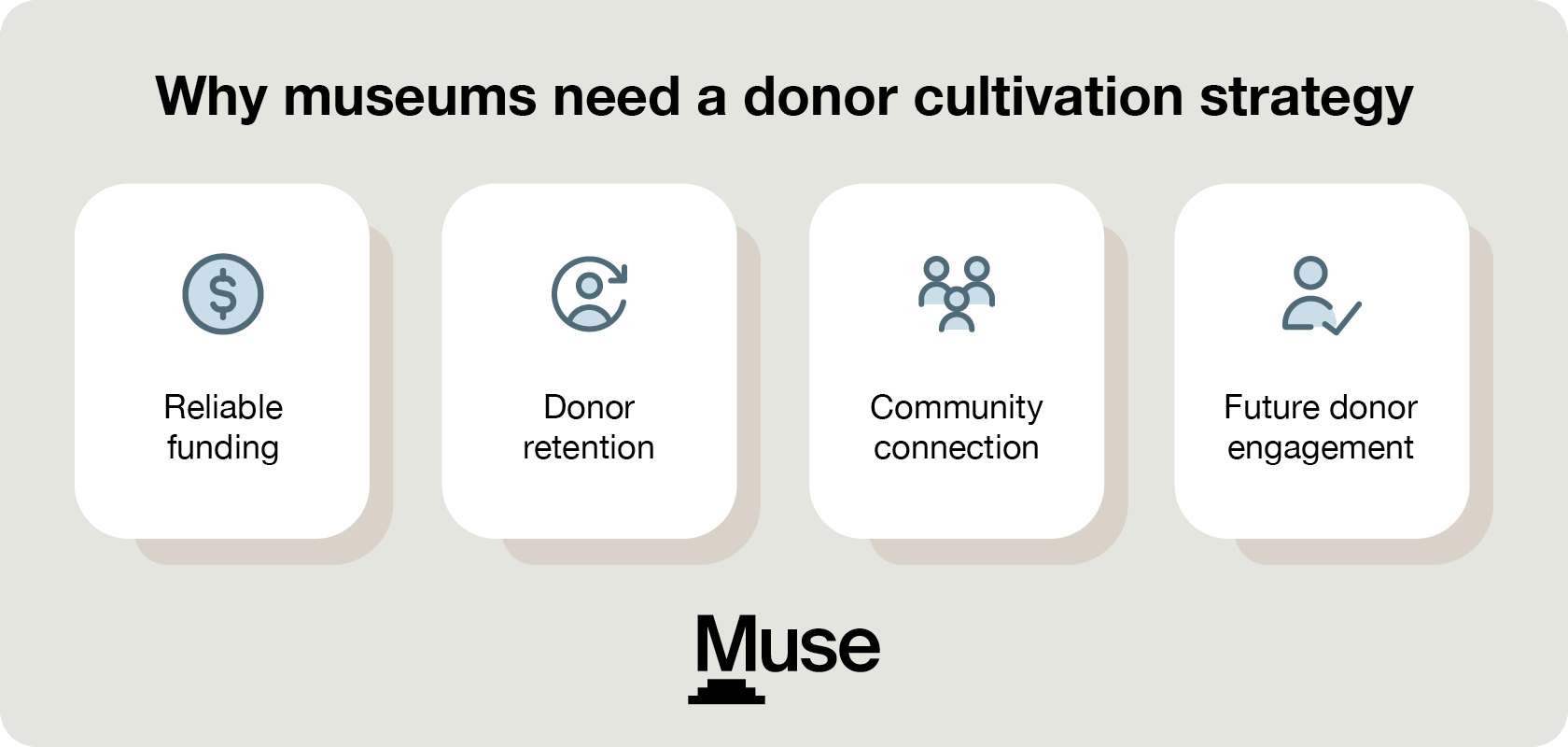
Relying only on ticket sales and a small group of large donors isn’t sustainable for long-term growth. A structured donor strategy offers:
Engaging museum donors usually comes down to a few major challenges:
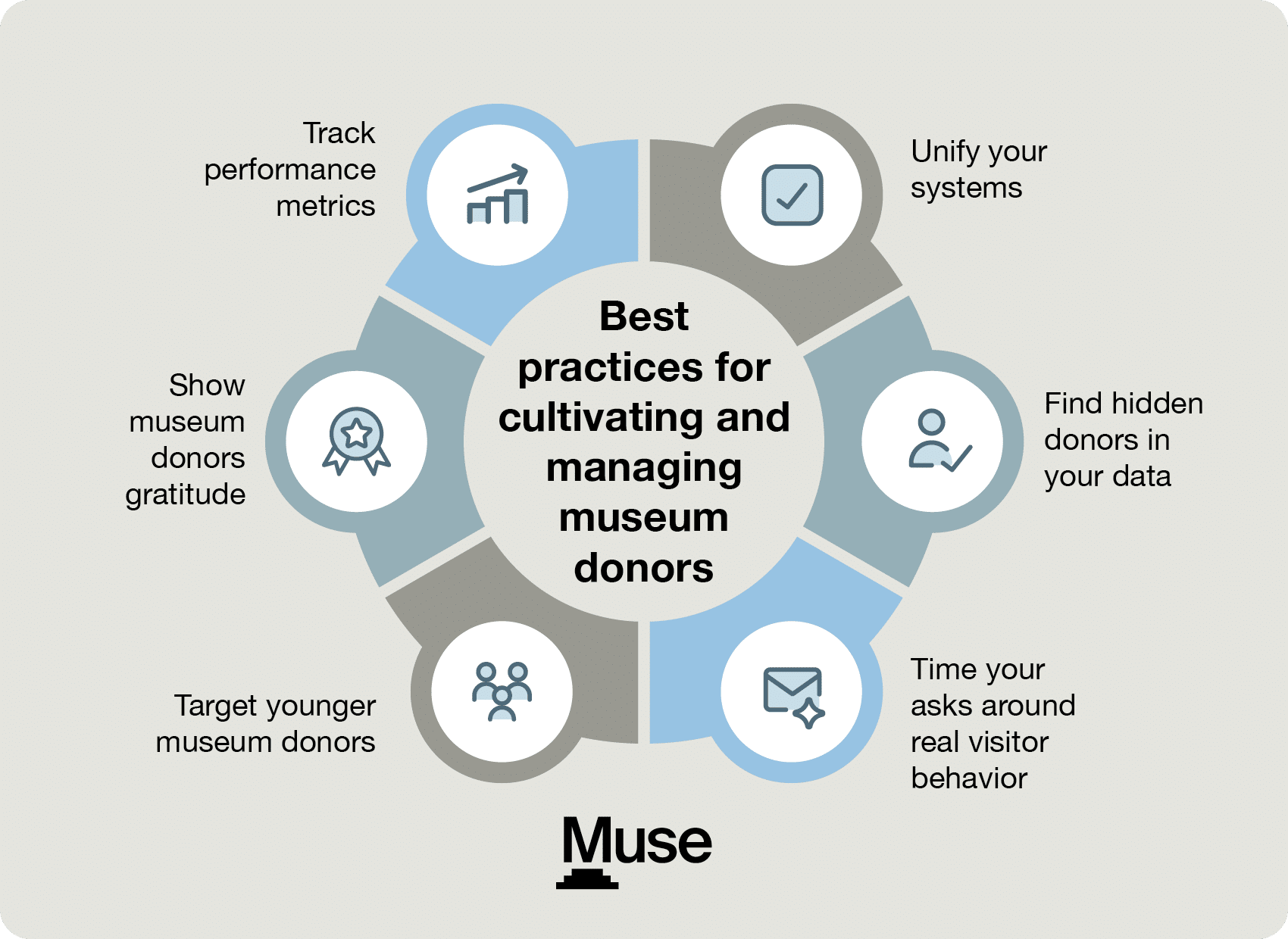
Turning casual visitors into dedicated donors takes a clear strategy and tools that connect the dots among admission tickets, gift shop purchases, and event sign-ups. Here’s how to build a strong donor community:
Generalized museum key performance indicators (KPIs) don’t do much to support specific museum donor engagement efforts. Here are some KPIs to keep in mind:
Visitor-to-Donor Conversion
What it measures: The share of casual visitors who convert into donors of any size.
How to calculate: Number of visitors who make a charitable gift (separate from ticket or retail purchases) ÷ total visitor count over the same period.
Why it matters: This is the foundation of donor upgrades and points to specific gaps in your strategies.
Donor Retention Rate
What it measures: How many donors from last year gave again this year, across any type of gift.
How to calculate: Number of repeat donors from prior year ÷ total donor count from the prior year.
Why it matters: Retaining donors is far less expensive than finding new ones. The average nonprofit retention rate is 40–45%. If you dip below that, it is time to launch win-back campaigns.
Donor Lifetime Value (LTV)
What it measures: The total value a donor brings across all channels (such as admissions, retail, memberships, and gifts combined).
How to calculate: Sum all revenue tied to that constituent’s record over the life of the relationship.
Why it matters: This helps you target major-gift outreach based on someone’s full relationship with your museum. It highlights valuable prospects who might look like small donors if you only looked at direct gifts.
Rising Generational Engagement
What it measures: How well you’re building a pipeline of younger supporters who’ll sustain giving long-term.
How to calculate: Track engagement among Millennial and Gen Z supporters across young-donor programming, ticket and event purchases, and giving.
Why it matters: Younger donors are already eager to support causes they care about. Building their loyalty right now protects your donor base as older givers step back.
Average Gift Size
What it measures: Whether the typical dollar amount donors give is growing, shrinking, or holding steady over time.
How to calculate: Total dollars raised from gifts ÷ total number of gifts, tracked over a consistent period (such as quarterly or annually).
Why it matters: Retention rates tell you if someone gave again, but they do not tell you if their giving is growing. A rising average gift size means your ask strategy is working. A dropping trend means donors are giving less, and you want to catch that before they leave for good.
Membership Renewal Rate
What it measures: The share of members who renew when their membership comes up for expiration.
How to calculate: Number of members who renew ÷ total number of members whose memberships expired in that period.
Why it matters: This is a narrower signal than Donor Retention Rate, tracking whether a supporter renews a specific membership product, while donor retention rate tracks whether a supporter continues giving in any form. A drop in member renewals usually shows up before you see it in donor retention or LTV numbers, giving you an early warning system so you can reach out before someone drifts away from giving completely. Tracking both tells you whether you’re losing members, donors more broadly, or both.
Bouncing between ticketing software and a separate third-party CRM leads to lost data, duplicated effort, and asks made in the dark. The fix is a single supporter record that consolidates all touchpoints in one place, so you can tailor asks and accurately calculate lifetime value (LTV). Getting there is a three-step process:
Most cultural institutions sit on a goldmine of untouched visitor data they don’t know how to tap into. Uncovering engaged guests in your existing community allows your development team to make warm introductions to promising prospects.
The key to finding these hidden donors lies in the quality of the data you collect and the software you use. Museum management software like Muse is designed to connect admissions, gift shop/cafe POS, and event records into a single dashboard. This makes finding your next prospects straightforward. Once you have the right tools in place, run a monthly report on guests who’ve engaged with your organization more than once in the past few months, such as repeat visits or extra purchases, to help you find potential donors.
The donor journey starts the moment someone buys a ticket, not months later when you send a generic annual appeal. Capture contact info at the point of sale and use it to send automated post-visit follow-ups, such as a quick thank-you or a story about your community work, alongside an option to apply their ticket price toward a membership.
From there, ongoing behavior should guide your outreach. Track total LTV across tickets, retail, and gifts. Set automated alerts when a regular guest’s visit frequency drops off so you can re-engage before they lapse. Also, send targeted invites based on the specific exhibits or programs they’ve enjoyed. Reaching out when interest is fresh leads to higher response rates and gift amounts.
Younger donors are ready to give (44% of Gen Z and 60% of Millennials already donate to causes annually), but many museums still aren’t prepared to reach them. Traditional boards, programming, and appeals tend to target an older audience.
Winning over younger patrons means rethinking both your spaces and your messaging. On the experience side, make philanthropy feel accessible rather than exclusive. For example, the Brooklyn Museum’s First Saturdays series offers free evening admission, live music, and drop-in programming on the first Saturday of most months. Free, recurring programming lowers the social and financial barriers that keep younger visitors away.
Also, involve younger donors further by giving them a real seat at the table. Youth boards allow young people passionate about your mission to actively shape the museum’s future and to build connections early. For instance, the Walker Art Center’s Teen Arts Council allows local high schoolers to meet with artists, learn more about contemporary art, and plan the museum’s teen programming. Meaningful experiences like these help younger people connect with your museum and give back by donating in the future.
To make your museum more appealing to younger audiences, pull the names of donors and members under 40 from your database, and invite the 15 people who have visited most often over the last year to a founding meeting for a Young Patrons Council. This advisory board of existing connections can help you tailor the rest of your youth outreach to their preferences so you aren’t left guessing.
Finding donors and timing your asks only gets you so far if you go quiet after they give. What you do after someone gives usually determines whether they become a repeat donor, directly driving the retention and average gift size metrics you’re already watching.
A donor who feels valued is much more likely to give again, and how you say thank you matters just as much as the ask itself. Send a real, personalized thank-you that calls out the exact program or exhibit their gift is supporting, rather than a generic receipt. Follow up a few months later with a quick update on the outcome: how their gift was used, what it made possible, or a story from the community it helped. For mid-level and major donors, a quick phone call or a handwritten note from a staff member or board member can go a long way toward showing your gratitude.
Donor appreciation needs to match the size and history of the relationship, and switching it up keeps it from ever feeling robotic. A few more ways to show meaningful gratitude include:
Once you’ve built out your general donor appreciation strategy, personalize specific touchpoints so they feel more connected to your museum. For example, an art museum could personalize its thank-you notes with a print from its collection. Small touches like these make a big impact in making your gratitude feel truly genuine.
Remember, none of these donor engagement tactics work in a vacuum. A hidden donor you find in your data is only as helpful as the unified system that lets you reach out to them. Your KPIs only matter if you use them to make real-time decisions. Use museum technology (like Muse) to build a workflow based on these insights that keeps supporters engaged, from initial visit to upgrading their gift.